
When do global fulfillment centers make sense?
Jeff Becker | December 1, 2022
As we expand our reach, and with the rise of remote work and more distributed work force, companies increasingly have reasons to ship items all over the globe.
Unfortunately, international shipping isn’t as simple as sending something domestically.
That is because of challenges with:

Duties & taxes

Long delivery time

Customs challenges
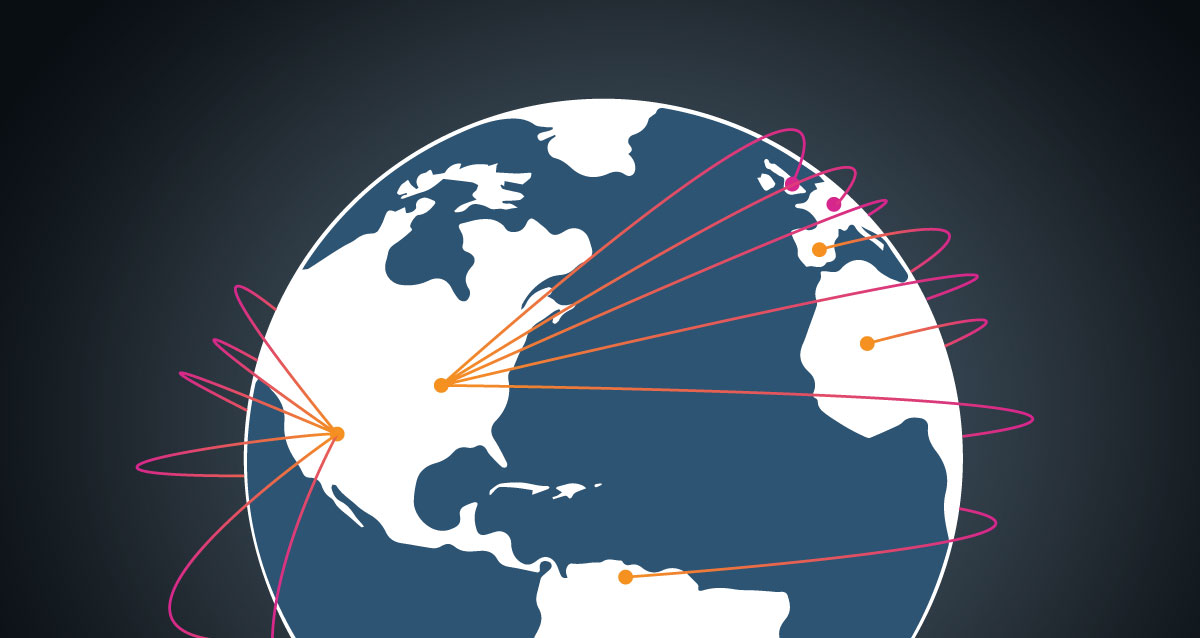
We have 2 fulfillment centers, one in Utah and one in Ohio, but we’re asked about global fulfillment centers on a regular basis to solve these 3 issues. In the past we’ve partnered with international 3PLs (third party logistics), and have looked at many options in different countries.
After a deep research dive and digging through the data, having global fulfillment centers is not a great solution to these issues for most of our clients and the majority of cases.
Geographical distance
One common misconception is that geographic distance is the primary driver of costs. While it certainly has some impact, many industries have supply chains that move materials between multiple continents before sending final products back to where they started. In some cases, geography is outright irrelevant, for example it’s cheaper to ship to Israel from the United States than from Europe.
For our business, the single biggest factor is simply whether the package can avoid customs clearance – and the only way to do that is if the end user lives in the same country as the fulfillment center. The reason shipping from our facilities to US locations seems so easy, affordable, and quick is that we aren’t dealing with clearing customs into another country.
For example, if you’re shipping to India and the fulfillment center is in India, it’s probably (keep reading) easier, cheaper, and quicker than shipping from the US. But if the package being shipped to India comes from anywhere else (even nearby in SE Asia), almost all the exact same problems exist as shipping from the US, but with new issues added. You still have higher costs, duties & taxes, and longer delivery times, all because of the need to clear customs.
If a client is almost exclusively in a single country, other than the US, then Kotis may not be their best option. They should find someone who is based out of, and sources from their country to avoid consistent customs charges.
Most companies do not have recipients in a single country though; and each client has recipients in different sets of countries that the others may not. The only way to solve the underlying challenges and costs with customs is by operating many warehouses in many countries. With a handful of orders to a single country per month, this investment doesn’t make sense.
Product Complications
Then there is the question about the product itself. If you have multiple warehouses there are two different options. Ideally, you’d produce items in the same country as the warehouse. However, this results in a client holding identical items in multiple facilities, leading to more inventory overall than if they consolidate in a single place, which leads to higher client costs, more vendors, and risk of brand inconsistency. What happens if one facility runs out of an item – does a single order end up being two shipments, one from each facility?
Finally, where is the product made in the first place? The other option is to make them all the items in a single country and ship items to each of the warehouse. For example, we could keep making all the product in the US, and ship in bulk to multiple fulfillment centers. The problem with this option is it simply shifts the complications around as we now have higher duties and taxes and longer lead times due to shipping the product in bulk vs simply shipping individual orders to each country.
No one in our industry, even the $1B/year companies, have warehouses in even the top 5 global markets. That’s because the logistics of managing warehouses in multiple countries is a nightmare and simply does not offer the cost savings most people think it might.
3PL Complications
Trying to establish our own warehouses with our own employees would bring substantial legal and financial obligations while also being entirely impractical without massive scale in each location. We’d likely have to find a 3PL. But can they provide the same services? Can they meet our timelines? Can they comply with strict customer security requirements? Can they integrate with our platform? Are there any language or culture barriers? Will kitting and packaging be consistent?
There are variables we simply cannot guarantee will meet our Kotis standards when taking operations outside the US. We have instead focused our efforts on optimizing our existing warehouses, finding features and cost-saving measures that likely exceed potential savings from managing additional warehouses.